
Fire Hazard Clearance

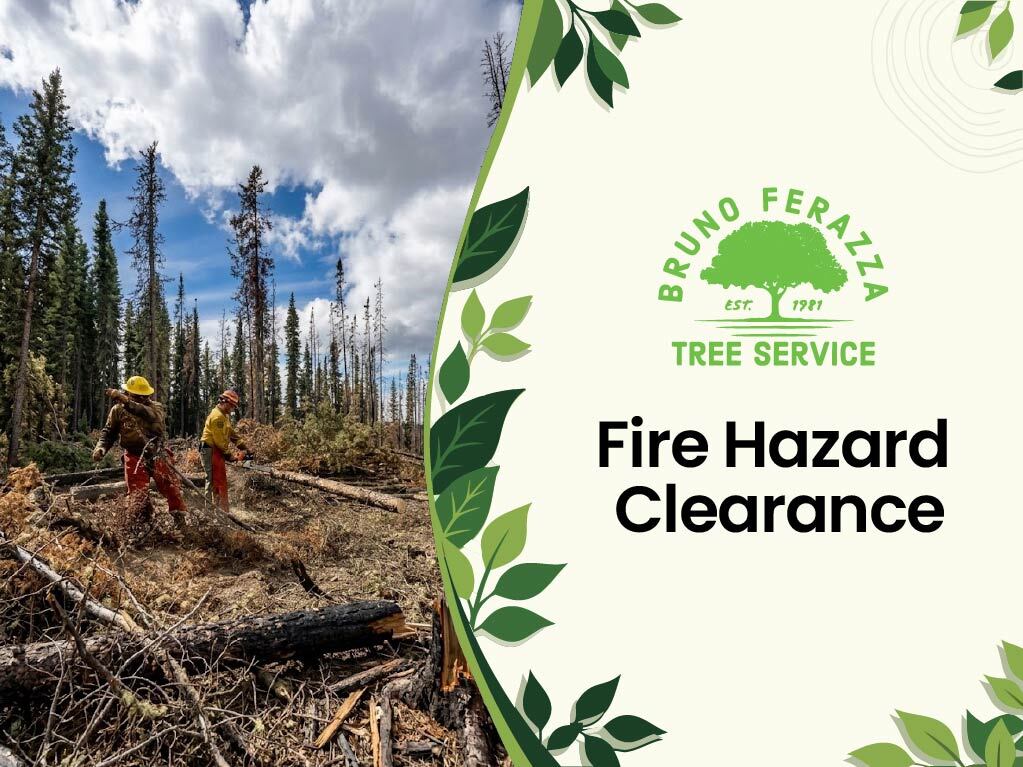
Dry limbs, dead vegetation and connected plants can create pathways for fire to move across a property and into tree canopies. Managing those fuels does not mean stripping the landscape bare. It means reducing combustible material and creating appropriate separation.
Bruno Ferazza Tree Service provides fire hazard clearance and defensible-space tree work throughout the greater Sacramento region. With more than 40 years of experience, we assess trees, woody vegetation, slope, access and nearby structures before recommending a scope.
What Does Fire Hazard Clearance Include?
Fire hazard clearance can combine several services, depending on the property and the requirements that apply. Our work may include:
- Removing dead branches and deadwood from trees
- Pruning low limbs that contribute to vertical fuel continuity
- Creating selective separation between shrubs and tree canopies
- Trimming branches away from roofs and structures
- Reducing dense or overgrown woody vegetation
- Removing hazardous or dead trees when approved and necessary
- Cutting and organizing brush or branch material
- Chipping limbs and woody debris
- Clearing tree debris from designated work areas
- Maintaining access around driveways, gates and structures
Treatment is site-specific. Slope, plant type, arrangement and distance from structures affect what should be addressed.
Defensible Space Is More Than Vegetation Removal
Defensible space is the managed area around a structure where vegetation, debris and combustible materials are arranged or reduced to influence fire movement. California guidance divides it into zones, with different priorities by distance. Requirements vary by location and authority.
Maintenance often includes removing dead material, interrupting continuous fuels and separating vegetation. The goal is not automatically to remove every tree. Excessive clearing can damage the landscape, while insufficient work may leave fuel pathways.
Vegetation clearance is only one part of wildfire preparation. Roofs, vents, gutters, decks and fences also influence vulnerability. No tree service can certify a home as fireproof or guarantee survival.
Deadwood and Ladder-Fuel Reduction
Dead branches can remain overhead or accumulate below trees. Shrubs and low limbs can form a vertical connection from ground fuels into taller vegetation, often called a ladder fuel.
Reducing that connection may involve deadwood removal, lower-branch pruning and space between shrubs and crowns. Clearance should reflect plant height, slope, tree condition and current guidance. Excessive canopy removal can stress a tree.
Roof Clearance and Tree Pruning Near Structures
Selective roof clearance can create separation from a structure, reduce debris falling directly onto the roof and improve access for maintenance.
The plan should consider branch attachment, weight and the remaining crown. Excessive one-sided removal can affect balance and appearance.
If branches are close to energized power lines, stay away and contact the responsible utility. Utility line-clearance work has specialized requirements and should not be treated as ordinary vegetation maintenance.
Brush Chipping and Debris Cleanup
Cut vegetation still needs management. Leaving branch piles in the work area can undermine fuel reduction. We offer wood chipping and tree-debris cleanup within an agreed scope.
Chips may be hauled away, placed in a designated location or retained, depending on the agreement. The estimate should explain how limbs, logs, chips and debris will be handled.
Burning is not included automatically and may be restricted by season, air-quality rules and permits. Check with the relevant authorities before burning.
Residential and Commercial Fire Clearance
Homes may need work around roofs, decks, fences, outbuildings, driveways and propane areas. Rural or foothill properties can involve slopes, access roads and larger management zones. Businesses, rentals and associations may need recurring work around buildings, parking, signs and property boundaries.
Bring any inspection notice or insurer request to the assessment. A written plan can identify priority areas, trees, branch clearance, chipping and haul-away. The issuing authority or insurer—not the contractor—decides whether completed work satisfies its standards.
Inspections, Notices and Local Requirements
California defensible-space and local weed-abatement rules do not apply identically to every parcel. Jurisdiction, hazard designation, lot size, slope and ordinances may affect the required work. Regulations continue to develop.
Consult CAL FIRE or the responsible local authority for current requirements. Follow any notice measurements and deadlines. We can quote requested tree and woody-vegetation work, but only the enforcing authority approves compliance.
What Affects Fire Hazard Clearance Cost?
Pricing factors include:
- Number, size and condition of trees
- Woody-vegetation density
- Branch height and climbing needs
- Slope, terrain and equipment access
- Nearby roofs, fences and utilities
- Removal, rigging, chipping and hauling
- Deadlines or phased scheduling
An on-site assessment allows the work areas, access, vegetation and cleanup expectations to be priced together.
Why Choose Bruno Ferazza Tree Service?
Bruno Ferazza Tree Service brings decades of field experience to tree maintenance, hazard reduction, removal and cleanup. Our published credentials include Certified Arborist WE-8308A, Certified Treecare Safety Professional CTSP 05093 and California contractor license CSLB #1058832.
We serve Roseville, Rocklin, Lincoln, Citrus Heights, Carmichael, Folsom, Auburn, Fair Oaks, Orangevale, El Dorado Hills and North Highlands. Contact us to confirm availability.
Need help reducing deadwood, low branches or woody debris around your property? Call Bruno Ferazza Tree Service at (916) 201-7462 to request a fire hazard clearance assessment and estimate.
Any Questions? Ask Us!!
Our Working Process
STEP 01
Inspection & Consultation
STEP 02
Planning & Preparation
STEP 03
Execution & Care
STEP 04
Cleanup & Final Review
Frequently Asked Questions
We answered your frequently asked questions here:
What is fire hazard clearance?
Fire hazard clearance reduces combustible vegetation and interrupts fuel pathways. Work may include deadwood removal, lower-branch pruning, separation, roof clearance, chipping and cleanup.
Is fire hazard clearance the same as defensible space?
Fire clearance supports defensible-space goals, but defensible space also includes roofs, gutters, decks, fences and stored materials. Authorities define and inspect applicable requirements.
Do all trees need to be removed for defensible space?
No. Defensible space focuses on dead material, fuel arrangement, separation and maintenance rather than automatic clear-cutting.
Can you remove low branches and deadwood?
Yes. Dead branch removal and selective pruning of lower limbs are among our listed services. The proposed cuts depend on tree structure, condition and the required clearance.
Do you provide brush chipping and cleanup?
Yes. Wood chipping and tree-debris cleanup can be included in the project scope. Confirm whether chips will be hauled, retained or placed in a designated area when reviewing the estimate.
Can you complete work listed in a fire inspection notice?
We can assess and quote tree and woody-vegetation work within our services. Provide the notice so its instructions can be reviewed. The issuing agency makes the final decision about compliance.
How often should fire hazard clearance be performed?
Maintenance frequency depends on vegetation growth, weather, leaf and needle accumulation, prior work and local requirements. Properties should be checked regularly and after significant wind or branch failure.
Does fire hazard clearance guarantee my property will be safe?
No service can guarantee that a structure will survive a wildfire. Vegetation management is one risk-reduction measure and should be combined with official guidance, home-hardening measures and emergency planning.
How do I request an estimate?
Call (916) 201-7462 with the property location, access details and any inspection notice or written requirements. A site assessment can then define the tree work, chipping and cleanup scope.