
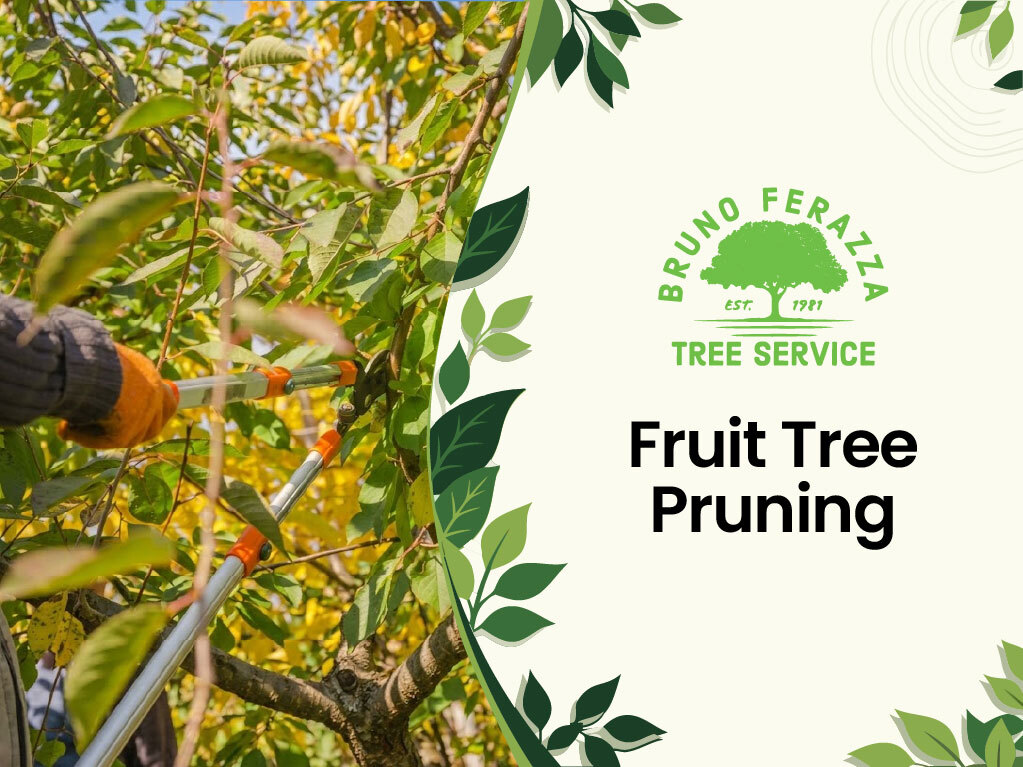
Fruit Tree Pruning

A productive fruit tree needs more than occasional cutting. Species, age, structure, fruiting wood, and previous care influence which branches should remain. A cut that benefits an apple may be unsuitable for a peach, fig, citrus, or cherry.
Bruno Ferazza Tree Service provides professional fruit tree pruning for homes, small orchards, rental properties, and managed landscapes throughout Greater Sacramento. We prune with practical objectives such as developing young-tree structure, maintaining manageable size, removing dead or damaged growth, improving canopy access, and restoring neglected trees gradually.
Call (916) 201-7462 to request an on-site fruit tree pruning evaluation and estimate.
Why Prune Fruit Trees?
Young trees need training to create a framework for future crops. Mature trees may require size management, deadwood removal, or thinning. Neglected trees may need phased restoration.
Common objectives include:
- Developing well-positioned scaffold branches on young trees
- Removing dead, broken, diseased, rubbing, or crossing branches
- Improving access to the canopy for harvest and maintenance
- Managing tree height and spread within the available landscape
- Directing new growth toward useful positions
- Removing selected water sprouts, suckers, and poorly placed shoots
- Retaining appropriate fruiting wood for the species
- Correcting previous pruning gradually
Pruning can support tree management and fruit production, but it does not guarantee a particular yield or fruit size. Pollination, variety, rootstock, irrigation, soil, weather, pests, disease, crop load, and seasonal care also affect results.
Fruit Tree Pruning Is Species-Specific
Fruit trees carry crops on different types and ages of wood. Apples and pears commonly produce on fruiting spurs, while peaches generally fruit on growth produced during the previous season. Cherries, plums, apricots, figs, citrus, and other trees have their own growth habits and timing considerations.
Using one formula across every tree can remove productive wood or stimulate unwanted shoots. Before pruning, we consider the species, variety when known, age, vigor, branch arrangement, visible buds, and the owner’s priorities. The intended structure may also vary: some deciduous fruit trees are trained to an open center, while others use a central-leader or modified-leader system.
Young Fruit Tree Training
The early years offer the best opportunity to develop useful structure with relatively small cuts. Training determines the height and spacing of scaffold limbs, influences future harvest access, and can reduce the need for large corrective cuts later.
A young fruit tree may need competing leaders, narrow attachments, poorly directed shoots, or branches at unsuitable heights addressed. However, too much pruning can delay canopy development and remove leaves the tree needs for growth. The plan should balance structure with establishment.
Pruning is only one part of establishing a young tree; irrigation, mulch placement, and trunk protection also matter.
Mature Fruit Tree Maintenance
Once the basic framework is established, pruning focuses on maintaining structure, fruiting wood, and practical canopy dimensions. Dead, damaged, crowded, downward-growing, and crossing branches may be considered. Selected vigorous upright shoots can be removed or redirected, while productive branches are retained according to species.
Managing height can make fruit easier to reach, but drastic cutting often triggers strong vegetative regrowth. A moderate, repeated approach usually offers better control than allowing the tree to become oversized and then making severe cuts.
Crop weight also matters. Poorly positioned limbs may bend under a heavy load, and fruit thinning or support may still be needed.
Restoring an Overgrown Fruit Tree
An old fruit tree can have sentimental and landscape value even when its canopy is dense or difficult to harvest. Restoration may be possible, but trying to correct years of growth in one visit can remove too much live foliage and produce vigorous water sprouts.
A restoration plan may begin with deadwood, broken limbs, obvious conflicts, and limited height or spread reduction. Additional improvements can be made in later pruning cycles after the tree responds. Some old trees contain decay, cavities, weak unions, or major structural problems that pruning cannot correct.
Bruno Ferazza Tree Service will explain what can reasonably be retained, whether staged pruning is advisable, and when removal may be a safer or more practical option.
Dormant Pruning vs. Summer Pruning
Many deciduous fruit trees are commonly pruned during dormancy because the branch structure is visible and dormant pruning can encourage vigorous spring growth. Summer pruning can help manage strong shoot growth and may have a greater size-controlling effect.
Timing is not universal. Apricots and cherries can have different disease-related considerations, citrus remains evergreen, and local conditions matter. The best season depends on species, tree condition, pruning objective, and the amount of work required.
Broken or hazardous branches may need prompt attention regardless of season. For planned work, an evaluation helps determine appropriate timing rather than relying on a single calendar rule.
Our Fruit Tree Pruning Process
Tree and goal assessment
We identify the species when possible and review age, visible condition, structure, previous cuts, access, and surrounding obstacles. We also ask what matters most to the owner: lower picking height, young-tree training, deadwood removal, size management, or restoration.
A tree-specific pruning plan
The scope identifies the branches and types of growth to address. When a correction should be divided over multiple seasons, we explain why. We avoid arbitrary requests to remove a fixed percentage without considering the individual tree.
Selective pruning
Cuts are made at suitable branch unions or buds based on the objective. The crew works to retain appropriate structure and productive wood while removing the growth included in the estimate. Larger trees may require professional climbing or aerial equipment.
Cleanup
Pruned material is handled as described in the written estimate. Chipping, hauling, larger wood, and final cleanup expectations should be confirmed before work begins.
Pruning Backyard Orchards and Multiple Trees
A property with several fruit trees benefits from a tree-by-tree plan. Different species may need different timing and pruning intensity, even when planted beside one another. Young trees, mature producers, and neglected specimens should not receive the same treatment.
For multi-tree properties, the estimate can prioritize structural concerns and seasonal follow-up.
Fruit Tree Pruning Cost
Cost depends on the number of trees, species, height, canopy density, condition, access, pruning history, equipment, and debris handling. A regularly maintained backyard tree is different from restoring a tall tree with years of crowded growth.
An on-site estimate allows us to define the objective and scope. Property owners should also confirm protected-tree rules, homeowners association requirements, neighbor permissions, and local restrictions when applicable.
Why Choose Bruno Ferazza Tree Service?
Fruit tree pruning requires an understanding of structure and the differences between species. Bruno Ferazza Tree Service brings more than 40 years of tree-care experience to residential and commercial properties across Greater Sacramento.
The company is led by an ISA Certified Arborist (WE-8308A) and Certified Treecare Safety Professional (CTSP 05093) and operates under California contractor license CSLB #1058832. We provide clear recommendations, written scopes, professional equipment, and cleanup.
We serve Roseville, Rocklin, Lincoln, Citrus Heights, Carmichael, Folsom, Auburn, Fair Oaks, Orangevale, El Dorado Hills, North Highlands, and nearby communities.
Call (916) 201-7462 to request a fruit tree pruning estimate.
Any Questions? Ask Us!!
Our Working Process
STEP 01
Inspection & Consultation
STEP 02
Planning & Preparation
STEP 03
Execution & Care
STEP 04
Cleanup & Final Review
Frequently Asked Questions
We answered your frequently asked questions here:
When is the best time to prune fruit trees?
It depends on species and objective. Many deciduous fruit trees are pruned during dormancy, while summer pruning may help control vigorous growth. Certain trees have disease-related timing considerations.
Do all fruit trees need the same pruning?
No. Fruit is produced on different types and ages of wood. The pruning method for an apple or pear may differ substantially from the approach used for peach, cherry, fig, or citrus.
Can pruning increase fruit production?
Appropriate pruning can support canopy structure, light distribution, and management, but it cannot guarantee yield. Pollination, weather, irrigation, soil, pests, variety, and crop load also affect production.
Can you make my fruit tree shorter?
Often, tree height can be managed through selective reduction, but the amount that can be removed responsibly depends on species, structure, health, and previous pruning. Large corrections may need several cycles.
Should water sprouts be removed?
Some vigorous upright shoots are removed because they crowd the canopy or grow in poor positions. Others may be retained or redirected when useful for renewal. The decision should fit the tree’s structure.
Can an old, overgrown fruit tree be restored?
Sometimes. Restoration usually works best as a staged process rather than severe pruning in one visit. Decay, weak structure, and declining health may limit what can be achieved.
Do you prune citrus trees?
Yes, when appropriate. Citrus trees are evergreen and have different growth and timing needs from deciduous fruit trees, so the scope should be designed specifically for the tree.
Will pruning prevent fruit tree diseases?
No. Removing certain infected or dead branches may be part of disease management, but accurate diagnosis, sanitation, timing, irrigation, and other treatments may also be required.
Is cleanup included?
The estimate should specify chipping, hauling, larger wood, and cleanup. Bruno Ferazza Tree Service explains the debris plan before scheduling.
How do I request an estimate?
Call Bruno Ferazza Tree Service at (916) 201-7462. Mention the number of trees, species if known, approximate height, and whether the goal is training, maintenance, size control, or restoration.