
Pollarding

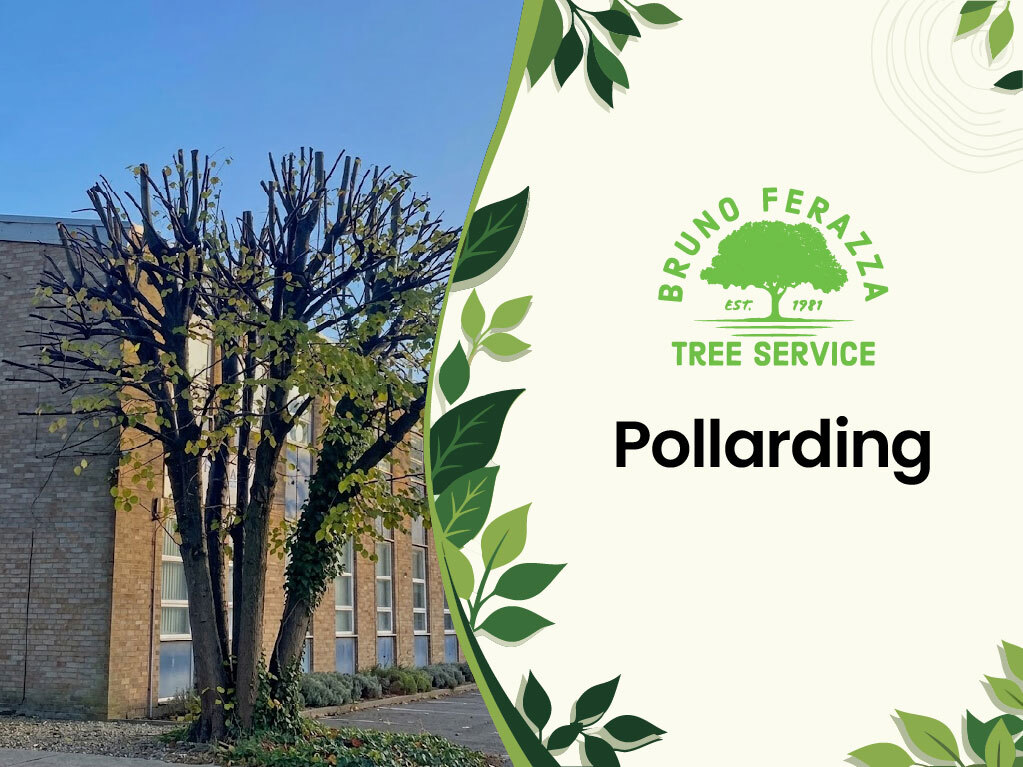
Pollarding creates a controlled tree form through deliberate pruning and ongoing maintenance. When started correctly on a young, suitable tree, new shoots are repeatedly cut back to established pollard heads, keeping the crown within a planned framework.
Pollarding is not appropriate for every tree, and it is not a one-time method for making an oversized mature tree smaller. Bruno Ferazza Tree Service evaluates the species, age, existing structure, previous cuts, site, and maintenance history before recommending new pollarding, routine repollarding, or another pruning method.
We provide professional tree care throughout Greater Sacramento. Call (916) 201-7462 to request an on-site pollarding evaluation and estimate.
What Is Tree Pollarding?
Pollarding is a specialized pruning system in which the upper branches of a young tree are cut back to create a permanent framework. New shoots grow from the ends of that framework. During later pruning cycles, those shoots are removed back near the same established points, gradually forming enlarged pollard heads.
The repeated cycle is central to the method. Allowing shoots to grow for many years can create long, heavy stems around the pollard heads, changing the work required and the tree’s structural condition.
Pollarding may maintain a formal appearance, manage a suitable tree within limited space, or preserve an established landscape design. Suitability depends on species and long-term commitment.
Pollarding Is Not Tree Topping
Pollarding and topping can look superficially similar because both involve substantial pruning, but the methods and objectives are different.
True pollarding normally begins when a tree is young. The initial framework is intentionally selected, and subsequent pruning returns new shoots to established pollard heads on a planned cycle. Topping makes indiscriminate cuts through branches, commonly leaving stubs or undersized lateral growth without a long-term structural plan.
Topping a mature, untrained tree does not turn it into a properly pollarded tree. It can create large wounds, damage natural form, stimulate dense regrowth, and increase future maintenance. When a mature tree has become too large, crown reduction, selective branch reduction, or removal may be more appropriate.
Which Trees May Be Suitable for Pollarding?
Pollarding suitability depends on species, age, vigor, climate, landscape purpose, and the structure available for forming a framework. Species commonly associated with the technique include certain plane trees, lindens, willows, mulberries, ashes, elms, eucalyptus, and selected maples or oaks. A species appearing on a general list does not automatically mean every specimen should be pollarded.
A young, vigorous tree offers more options for establishing pollard points with smaller cuts. Starting on an older tree may require large wounds and excessive canopy loss. Decay, weak unions, drought stress, root damage, or unsuitable structure may rule out the treatment.
When Is Pollarding Useful?
Pollarding may be considered when:
- A young, suitable tree requires a deliberately controlled framework
- A formal row or landscape feature is already maintained as pollards
- An established pollarded tree is due for its recurring pruning cycle
- A property manager wants uniform tree forms supported by a long-term plan
- A lapsed pollard requires evaluation before heavy shoots become larger
- The intended landscape design depends on repeated seasonal shoot growth
Pollarding should not be chosen as a quick fix for any large tree near a house or utility line. Trees near energized conductors require coordination with the electric utility, and size conflicts may be better addressed through reduction pruning or species replacement.
Our Pollarding Process
Tree and history assessment
We inspect the species, trunk and branch structure, visible condition, old cuts, pollard heads, shoot size, access, and targets below the canopy. Where possible, we determine whether the tree has a documented pollarding history or has simply been topped in the past.
A defined maintenance objective
The proposed scope explains whether the work will establish a young framework, maintain existing pollard heads, or manage an overgrown pollard. We also discuss likely follow-up intervals so the property owner understands the continuing commitment.
Careful pruning
During maintenance, new shoots are cut back near the previous pollarding points without unnecessarily damaging the established heads. Cut placement must account for the tree’s current structure. Large or neglected shoots may require controlled rigging, aerial equipment, or a phased approach.
Maintaining an Established Pollard
Maintenance frequency is not identical for every tree. Species, growth rate, desired appearance, shoot size, site conditions, and the history of previous pruning influence the interval. Some formal pollards are cut frequently, while others follow a longer multi-year cycle.
Regular maintenance keeps regrowth smaller and makes it easier to return to the established framework. Delaying too long can result in heavier stems and greater forces around old pollard heads. The work can become more complex and may require an arborist to determine whether returning directly to the former cut points is appropriate.
Property owners should budget for recurring inspection and pruning before choosing pollarding.
Managing an Overgrown or Neglected Pollard
A lapsed pollard deserves careful evaluation. Long stems may have developed from old heads, some attachments may be weak, and decay can be present around historic cuts. Removing every shoot at once is not always the best answer.
Options include selective reduction, weak-growth removal, staged restoration, retaining branches, modifying the framework, or removing a tree in unacceptable condition. An overgrown pollard should not be aggressively recut without understanding its likely response.
Pollarding vs. Crown Reduction
Pollarding establishes and repeatedly maintains fixed pruning points. Crown reduction decreases the current height or spread by shortening leaders and branch ends to suitable lateral branches while retaining a more natural outline.
For an unpollarded mature tree that has outgrown part of its space, crown reduction may be the more appropriate conversation. For a young tree in a formal design, or an established pollard with a documented cycle, pollarding may fit the objective. Bruno Ferazza Tree Service recommends the method that matches the actual tree rather than using the terms interchangeably.
Pollarding Cost
Cost depends on tree height, number of pollard heads, shoot size, how long maintenance has lapsed, access, equipment, rigging, surrounding obstacles, and debris handling. A regularly maintained young pollard differs greatly from a tall tree carrying years of heavy regrowth.
An on-site estimate allows us to define the work and discuss follow-up maintenance. Local protected-tree rules, permits, homeowners association requirements, and utility restrictions should also be confirmed before pruning.
Why Choose Bruno Ferazza Tree Service?
Pollarding requires judgment, consistent cut placement, and a realistic maintenance plan. Bruno Ferazza Tree Service brings more than 40 years of tree-care experience to residential and commercial properties across Greater Sacramento.
The company is led by an ISA Certified Arborist (WE-8308A) and Certified Treecare Safety Professional (CTSP 05093) and operates under California contractor license CSLB #1058832. We provide clear recommendations, written scopes, professional equipment, and cleanup.
We serve Roseville, Rocklin, Lincoln, Citrus Heights, Carmichael, Folsom, Auburn, Fair Oaks, Orangevale, El Dorado Hills, North Highlands, and nearby communities.
Call (916) 201-7462 to request a pollarding or repollarding estimate.
Any Questions? Ask Us!!
Our Working Process
STEP 01
Inspection & Consultation
STEP 02
Planning & Preparation
STEP 03
Execution & Care
STEP 04
Cleanup & Final Review
Frequently Asked Questions
We answered your frequently asked questions here:
What is pollarding?
Pollarding is a recurring pruning system that develops a permanent framework and established pollard heads. New shoots are periodically removed back near those same points to manage size and form.
Is pollarding the same as topping?
No. Pollarding is planned, generally begins on a young suitable tree, and follows a repeated maintenance cycle. Topping makes indiscriminate cuts without an established framework.
Can any mature tree be pollarded?
No. Starting pollarding on a mature tree may require large cuts and excessive canopy loss. Species, age, vigor, structure, condition, and long-term objectives must be evaluated first.
Which tree species can be pollarded?
Certain plane trees, lindens, willows, mulberries, ashes, elms, eucalyptus, maples, and oaks may respond to pollarding. Suitability still depends on the individual tree and local conditions.
How often must a pollarded tree be pruned?
The interval depends on species, shoot growth, desired form, structure, and management history. Some trees need frequent maintenance, while others follow a multi-year cycle.
What happens if pollarding is neglected?
Shoots can become long and heavy around the old heads. This may increase pruning complexity and structural concerns. An arborist should assess a lapsed pollard before it is cut back.
Can an overgrown pollard be restored?
Sometimes. Restoration may involve selective or staged pruning rather than removing every shoot at once. The tree’s species, decay, attachment strength, and previous cuts influence the recommendation.
Is pollarding good for trees?
For an appropriate species started young and maintained consistently, pollarding can be a deliberate management system. Poorly timed, unsuitable, or inconsistent pruning can create stress and structural problems.
When is pollarding performed?
Timing varies by species and objective. Many trees are maintained during dormancy, but some species require different timing. An evaluation should determine the schedule.
How do I request an estimate?
Call Bruno Ferazza Tree Service at (916) 201-7462. Mention the tree species if known, whether it has old pollard heads, and when it was last pruned.